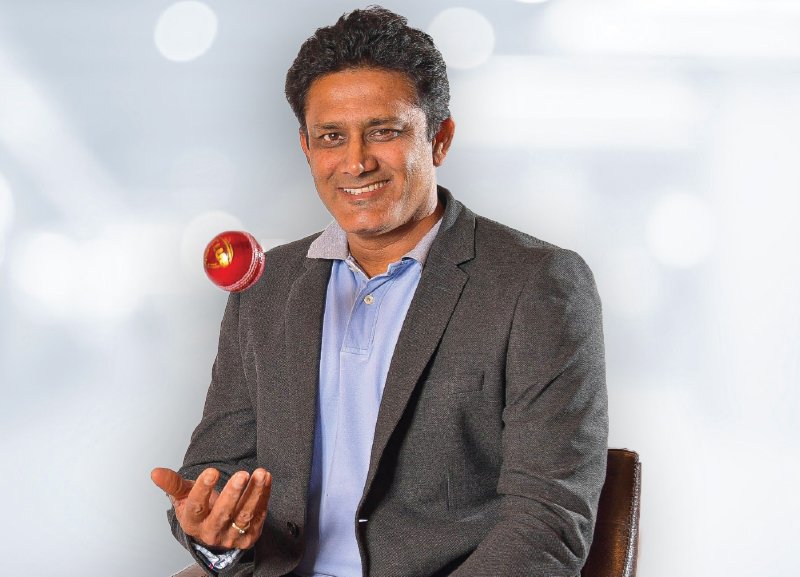
Anil Kumble, fondly nicknamed “Jumbo” for his towering presence and unyielding spirit on the field, stands as one of India’s most iconic cricketers. Born on October 17, 1970, in Bangalore, he emerged as a leg-spin bowler who redefined the art of spin bowling in Indian cricket. Over an illustrious career spanning nearly two decades, Kumble became synonymous with resilience, accuracy, and record-breaking performances, amassing a legacy that places him among the all-time greats in the sport.


Kumble’s journey into international cricket began in his late teens. He made his first-class debut for Karnataka in the 1989-90 Ranji Trophy season, showcasing his potential as a spinner early on. His breakthrough came in 1990 when he was selected for the Austral-Asia Cup. That same year, on April 25, he made his One Day International (ODI) debut against Sri Lanka in Sharjah. Just a few months later, on August 9, Kumble stepped onto the Test arena against England at Old Trafford in Manchester, marking the start of a remarkable Test career. At the age of 19, he was already displaying the guile and control that would define his bowling, though his early years were about honing his skills amid stiff competition from established spinners.
As a bowler, Kumble’s achievements are nothing short of legendary. He relied on a unique style that combined sharp bounce, subtle variations, and relentless accuracy rather than prodigious turn, making him particularly effective on Indian pitches and abroad. In Test cricket, he claimed 619 wickets in 132 matches at an average of 29.65, retiring as India’s highest wicket-taker and the third-highest overall behind Muttiah Muralitharan and Shane Warne. His ODI tally stood at 337 wickets in 271 games, with an average of 30.89, cementing his role in limited-overs success as well.
One of his crowning moments came in February 1999 during a Test against Pakistan at the Feroz Shah Kotla in Delhi, where he claimed all 10 wickets in a single innings with figures of 10/74, becoming only the second bowler in history after England’s Jim Laker to achieve this feat.
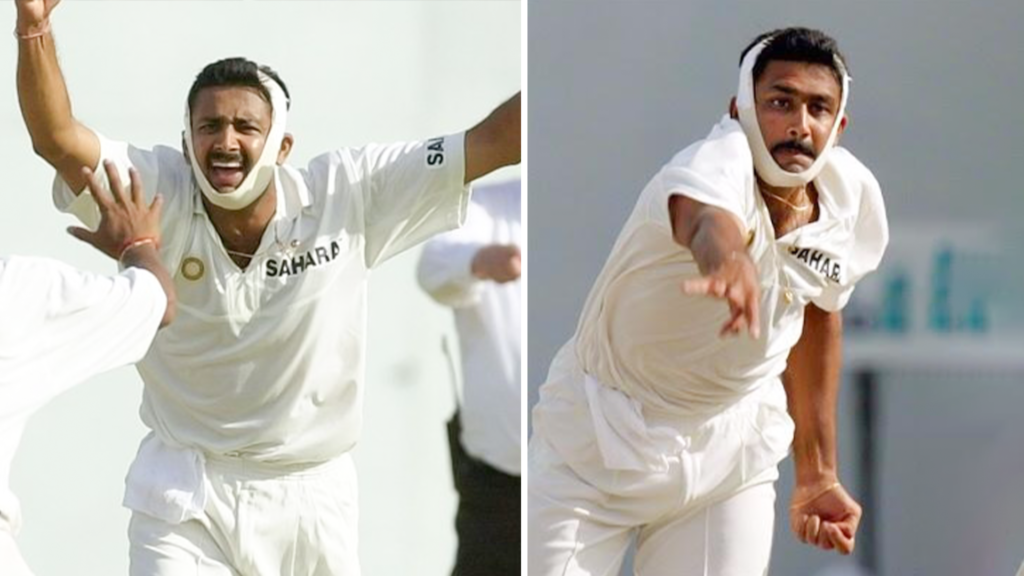
Another iconic display of his grit occurred during the 2002 Antigua Test against the West Indies. While batting in the first innings, Kumble was struck on the jaw by a vicious bouncer from Mervyn Dillon, fracturing his jaw. Despite the severe injury, which required surgery upon his return home, he refused to abandon the team. The sight of Kumble emerging from the pavilion the next day, his face heavily bandaged and wrapped tightly to support the broken jaw, ready to bowl in the second innings, remains one of cricket’s most inspiring images. Battling immense pain, unable to speak properly or eat solid food, he sent down 14 consecutive overs, conceding just 29 runs, and notably dismissed the legendary Brian Lara – becoming the first bowler to take Lara’s wicket while bowling with a broken jaw. This act of extraordinary courage and determination exemplified his unbreakable spirit and dedication to the game.
Kumble’s endurance shone in other milestones too: he was the fastest Indian to reach 50 Test wickets in just 10 matches, and he notched 35 five-wicket hauls in Tests, including eight instances of 10 wickets in a match. In the 1996 Cricket World Cup, he emerged as the tournament’s leading wicket-taker with 15 scalps at an average of 18.73, playing a pivotal role in India’s campaign. His ability to dismantle batting line-ups under floodlights was highlighted when he took six wickets in just six overs in an ODI, a first in world cricket.
While primarily known for his bowling prowess, Kumble was no slouch with the bat, often providing crucial lower-order resistance that turned matches in India’s favor. In Tests, he accumulated 2,506 runs at an average of 17.77, including one century and five half-centuries. His maiden Test hundred came in 2007 against England at The Oval, an unbeaten 110 that helped India draw the match and win the series – a rare feat for a number 8 batsman. In ODIs, he scored 938 runs at an average of 10.53, with a highest of 26, often chipping in with handy runs during chases or building innings. His batting was characterized by determination rather than flair, exemplified in partnerships that frustrated opponents and stabilized the tail.
Kumble’s leadership added another dimension to his career. Appointed captain in late 2007, he led India in 14 Tests, securing three wins, and one ODI victory. His tenure included guiding the team through transitional phases, though it was brief.
After 18 years of international cricket, Kumble announced his retirement from the longer format midway through the third Test against Australia in Delhi in November 2008 (specifically on November 2), citing a finger injury and the desire to make way for the next generation. He had already stepped away from ODIs in 2007, with his last appearance against Bermuda on March 19 during the World Cup. Post-retirement, Kumble transitioned into coaching, administration, and commentary, serving as India’s head coach from 2016 to 2017 and earning induction into the ICC Hall of Fame in 2015.
Kumble’s career embodies the essence of perseverance in cricket. From a young debutant to a record-holding legend, he not only dominated with the ball but also inspired generations with his grit, leaving an indelible mark on Indian cricket history.